


| Many of the charts & tables found on this site are PDFs. |
 |
![Publishing Systems Powered by iProduction [ling] Publishing Systems Powered by iProduction [ling]](/images/powered_by_grey.gif)
|
|
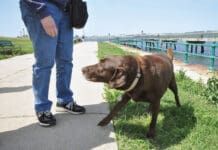
Teach Your Dog to Run Off LeashMy dog, Molly, runs like the wind. When I see her run, it is impossible for me not to appreciate the beautiful, graceful way she moves. She is also a rescue dog, with a number of canine behavior problems caused by severe neglect in her first few months. The combination of a bad environment and a fearful temperament created a dog who protects herself by aggressively warning off any stranger. An occasional off-leash run is one of the few ways I can give Molly enough exercise to keep her calm and make her unequivocally happy, and this practice is improving our relationship. Its not without some stress, however.
Home Treatments for Injured DogsA muscle strain here, a pulled ligament there, a sprain, a bruise pretty soon were talking about serious problems. Canine sports injuries are increasingly common, but there is much you can do to catch them early, treat them correctly, and reduce the risk of your dog getting badly hurt, needing surgery, or having to retire from competition. Every dog is a candidate for injury, but those at special risk include overweight dogs, weekend athletes, couch potatoes, dogs with arthritis, and dogs engaged in search and rescue, flyball, agility, freestyle, disc dog (Frisbee), field work, dock diving, obedience, weight pulling, dog sledding, and other sports.
More...
October 2008
View the Full Issue (HTML)
View the Full Issue (PDF) ...
Help for OCD Dogs Youve probably heard about people who wash their hands repeatedly until the skin wears off, who pull out their hair until theyre bald, or return home, time after time after time, to make sure the stove is turned off. These are obsessive-compulsive disorders (OCDs). Sad to say, OCD behaviors arent confined to humans; dogs get them, too. Oh, you wont see your dog worrying about whether the stove was left on, nor will you catch him washing his paws repeatedly in the sink. Dogs have a whole set of potential OCDs all their own, specific to canine behavior. Canine OCDs are just as capable of destroying a dogs ability to function as human OCDs are capable of affecting human lives. OCD is a psychiatric disorder characterized by obsessive thoughts and compulsive actions, such as cleaning, checking, counting, or hoarding. One of the anxiety disorders, OCD is a potentially disabling condition that can persist throughout a persons life. The individual who suffers from OCD becomes trapped in a pattern of repetitive thoughts and behaviors that are senseless and distressing but extremely difficult to overcome. OCD occurs in a spectrum from mild to severe, but if severe and left untreated, can destroy a persons capacity to function at work, at school, or even in the home.
Nocturnal Dogs Some of my friends have been horrified to learn that my husband and I have chosen, so far, to allow our new dog, Otto, to spend his nights outdoors. From some of our friends reactions, youd think we were turning him loose in the Alaskan wilderness each winter, but the fact is, the decision was made in response to Ottos own wishes and our own pressing need for sleep! Allow me to explain. As Ive hinted before, Otto is quite nocturnal. Left to his own devices, he would sleep through most of the day, and do his very best to party all night. To his dismay, hes alone in the wee hours. This is incredibly boring, but hes game for the challenge of finding things to do, even with so few activity partners at night! On the few nights when we did try to have him sleep in the house, he paced, whined, chewed stuff up, and nudged me repeatedly (seemingly right after he had gotten a drink of water, and had water all over his beard, every time) as I slept. When we gave him toys and chew-items, he threw them around, clunking them into the walls and furniture. Then he paced and whined some more.
Remedies for Kennel Cough Anyone whos heard it will recognize the dry, hacking, somethings-stuck-in-my-throat cough that wont quit. Its the signature symptom of canine infectious tracheobronchitis, also known as Bordetellosis, Bordetella, and most commonly as kennel cough. Whatever you call it, tracheobronchitis is one of the worlds most widespread canine diseases. Like the common cold in humans, tracheobronchitis is highly contagious, rarely fatal, and runs its course in a few days. Fortunately, there are several ways to help make canine patients more comfortable, speed recovery, and prevent future infections. Tracheobronchitis is called kennel cough because of its association with boarding kennels, animal shelters, veterinary waiting rooms, grooming salons, and other areas where dogs congregate in close quarters. It can strike dogs of any age but is most common in puppies, whose immune systems are still developing, and adult dogs with conditions that impair immune function.
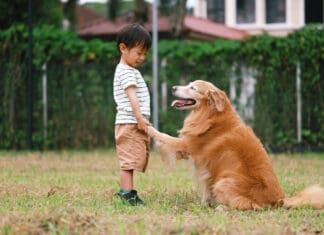
Dog Trainers Use of Generalizing a Behavior But he does it at home! Usually uttered in a plaintive wail, this common dog owner complaint is often heard in dog training classes, among other places. When one of my students says this, I reassure them that I believe their dog probably does perform the behavior in question with a high degree of reliability in the comfort of his own home. The fact that he wont do it in class is usually a generalization issue; the owner has only practiced the behavior with her dog at home. He doesnt know hes supposed to do it other places. According to authors Mary Burch, PhD, and Jon Bailey, PhD, in their excellent book, How Dogs Learn, Generalization occurs when behaviors are seen in contexts other than those in which they were originally trained. Simply stated, this means practicing with your dog in different places, at different times of the day, under different conditions, in the presence of different people, dogs, and a variety of other distractions.
Solutions for Reactive Dog Behavior At some point in our lives, some of us find ourselves living with a difficult dog, one whose behavior challenges our patience, and exhausts our training knowledge and opens our hearts and eyes to a new, better way of training. This is the story of one such dog and her very knowledgeable dog owner. Together, they reached an entirely new and higher level of dog training skills, thanks to the owners life-altering experiences with a reactive dog who wasnt fit to compete in the career intended for her: Flyball. Flyball is not the sport for everyone. It is a relay team event, which means you have to commit to training and competing with your dog and other dogs and dog owners as a team, and you have to have an appreciation for over-the-top dogs and the resulting cacophony of sounds. In flyball, a team of four dogs race, one after the other, leaping a series of hurdles, throwing their bodies against a spring-loaded box that ejects a tennis ball, snatching the ball, and hurtling their bodies back down the row of jumps to where their next teammates strain to be released for their turns. The fastest team wins.
|
|
|